
The Difference Between Resting and Actually Releasing Tension
Sitting on the couch or lying in bed does not always mean the body has let go of the day. Jaw clenching, raised shoulders, shallow breathing, and mental rumination can remain active even during rest. A few gentle practices may help create more ease.


You finally sit down at the end of a long day.
The chores are done. The laptop is closed. You are on the couch, watching something familiar and trying to relax.
But your body has not fully joined you.
Your teeth are still pressed together. Your shoulders are slightly lifted. Your hands feel tight, and your mind is already rehearsing tomorrow's to-do list.
You are resting, but you may not feel fully at ease.
This is common.
Physical stillness and tension release are not always the same thing. Sitting or lying down can be helpful, but the body may continue holding patterns that built up during the day.
The goal is not perfect relaxation. It is to notice when your body is still working harder than it needs to and offer it a gentler way to settle.
Why rest and release are not always the same
Rest usually means reducing activity. You stop moving, pause your work, or give yourself time away from demands.
Release is a little different. It involves noticing where effort is still present and allowing some of that effort to soften.
For example: sitting on the couch while clenching your jaw, lying in bed while your shoulders remain tense, watching television while scrolling on your phone and thinking about work, or taking a break while holding your breath during every new message.
None of these patterns means you are doing rest incorrectly.
It simply means that the body does not always shift instantly from a demanding day into a calmer state. Sometimes it needs a little time and a little attention.
Signs that your body may still be holding on
You do not need to scan your body constantly.
But a brief check-in can help you notice whether stillness is actually feeling restful.
Common signs may include: teeth pressed together, a tired or tight jaw, shoulders lifted toward the ears, hands clenched or gripping the phone, breathing that feels rushed or restricted, a stomach that still feels tight, difficulty settling into one position, or a mind that keeps replaying unfinished tasks.
These signals do not prove that stress is the cause. Physical symptoms can have many explanations.
The aim is simply to notice whether familiar tension patterns are still present after the day has slowed down.
Everyday factors that can keep tension active
Several ordinary habits may keep the body in a more activated state even during rest.
Jaw clenching
Many people clench or grind their teeth during concentration, stress, or sleep.
You may notice jaw tension while working, driving, scrolling, or trying to fall asleep.
Because clenching can become habitual, it may continue even when the original pressure has passed.
Screen time
A break does not always feel like a break when it still involves a screen.
You may leave your desk, sit on the couch, and then spend the next hour looking down at your phone.
That position can keep the neck and shoulders working harder than expected.
Mental rumination
The body can be still while the mind stays busy.
Replaying conversations, anticipating tomorrow's tasks, or trying to solve unfinished problems can make it harder to settle.
This does not mean you need to stop every thought. It may simply help to notice when your rest time has quietly become another period of mental work.
Habitual posture
The body learns repetition.
If you spend long parts of the day leaning forward, tightening your shoulders, or bracing your abdomen, those patterns may continue after work ends.
A small reset can help interrupt the habit.
Fatigue
Tiredness can make it harder to notice what the body needs.
You may stay in an uncomfortable position because moving feels like effort, or continue scrolling because choosing a more restorative activity feels difficult.
Sometimes the most helpful step is very small.
Why forcing relaxation can add pressure
It is easy to turn relaxation into another task.
You may think: I should be calmer by now, or why can't I just relax.
But trying too hard to force the body into ease can create more tension.
A gentler approach is to notice what is happening without demanding an immediate result: my shoulders are still tight, my jaw is still working, my mind is moving quickly.
That observation is enough. You can offer one small adjustment and let the body respond in its own time.
Five gentle ways to invite more ease
These practices are designed for ordinary moments of everyday tension. They are not treatments and they are not substitutes for medical care.
1. Let your teeth separate
Check whether your upper and lower teeth are touching.
If they are, allow a little space between them. You do not need to force your jaw open. Let it feel slightly heavier and less effortful.
2. Lower your shoulders
Notice where your shoulders are.
If they have lifted, let them drop gently. Loosen your hands and allow your arms to rest more fully.
3. Change position
If you have been sitting for a long time, stand up.
Walk around the room, stretch gently, or change where you are sitting. Sometimes the body needs movement before stillness feels comfortable.
4. Take a comfortable breathing pause
Notice your next few breaths.
If your breathing feels rushed or tight, allow the next breath to become a little slower and easier. There is no need to force a deep inhale. The goal is comfort, not performance.
5. Try a brief tension-and-release practice
Choose one small area, such as your shoulders or hands.
Tighten the muscles gently for a few seconds, then let them soften. Notice the difference between holding and releasing. Keep the movement comfortable and avoid forcing anything.
A simple three-minute evening reset
You can try this before settling into your evening.
Minute 1: Notice
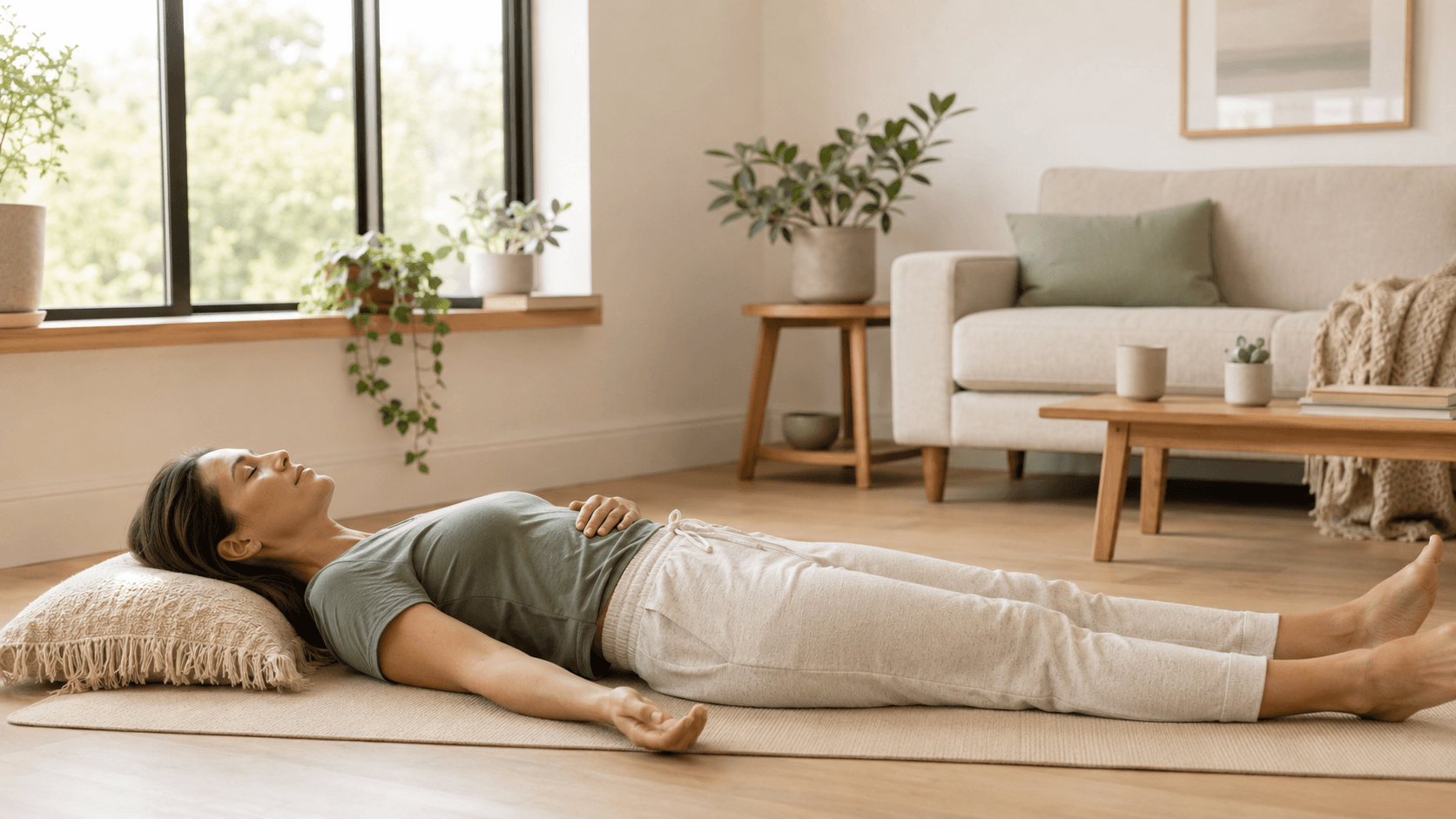
Sit or lie comfortably.
Ask: are my teeth touching, are my shoulders lifted, are my hands gripping anything, does my breathing feel comfortable.
Do not try to fix everything. Just notice.
Minute 2: Soften
Allow a little space in the jaw.
Lower the shoulders slightly. Let the hands rest. Take a few comfortable breaths.
Minute 3: Choose one supportive next step
Ask: what would make this evening feel a little more restorative?
- Putting the phone away
- Changing position
- Dimming the lights
- Taking a short walk
- Stretching gently
- Going to bed a little earlier
When to seek professional advice
Everyday tension is common, but physical symptoms should not be dismissed automatically.
Speak with a qualified healthcare professional if you notice persistent, severe, or worsening muscle tension, jaw pain, clicking, locking, or difficulty chewing, frequent headaches, numbness, tingling, or radiating pain, or symptoms that interfere with sleep, work, or daily life.
It may also be useful to speak with a licensed mental health professional when stress feels difficult to manage or when attention to physical sensations begins to increase anxiety.
Final thought
Rest is not only about stopping.
Sometimes the body needs a moment to notice that the day has changed.
You do not need to force perfect relaxation or monitor every sensation.
A brief pause, a softer jaw, lower shoulders, and one supportive evening choice may be enough to help the body begin letting go.
Explore further: How Stress Can Show Up in the Body·Why You May Carry Tension in Your Jaw, Neck, and Shoulders·A Beginner's Guide to Body Scanning·How to Notice Physical Signs of Overwhelm Earlier
Educational Disclaimer
This content is for informational and educational purposes only. It is not intended as medical advice and does not replace professional consultation. Always speak with a qualified healthcare provider before making changes to your health routine.
A Practice to Try
A short guided practice connected to this topic.
The Power To Let Go & Be Loved For All That You Are
Beginner
A gentle guided meditation focused on letting go, softening inward, and reconnecting with a sense of self-acceptance and emotional ease.
This practice is for educational purposes only and is not medical advice. If you feel unwell or have a medical condition, consult a qualified healthcare professional before starting any new practice.
Related Reading

How Stress Can Show Up in the Body
Stress is not only a mental experience. It may also show up through muscle tension, changes in breathing, fatigue, restlessness, sleep disruption, or digestive discomfort. Learning to notice patterns gently can help you respond earlier without assuming that every symptom is caused by stress.

Why You May Carry Tension in Your Jaw, Neck, and Shoulders
Jaw, neck, and shoulder tension often builds gradually during demanding days. Stress, posture, screen time, fatigue, and jaw clenching may all play a role. Learning to notice these patterns gently can help you respond earlier, without assuming that every ache is caused by stress.
A Beginner's Guide to Body Scanning
A body scan is a simple way to pause and notice what is happening in your body without trying to fix every sensation. This beginner-friendly guide offers a calm 3–5 minute practice you can use during ordinary days.

How to Notice Physical Signs of Overwhelm Earlier
Overwhelm does not always arrive all at once. It may begin with small physical signals such as a tight jaw, raised shoulders, changes in breathing, fatigue, or difficulty focusing. Learning to notice your own patterns gently can help you respond earlier.

Continue exploring
Discover guides, supplements, books, and practical resources for stress & mental balance.