
How Stress Can Show Up in the Body
Stress is not only a mental experience. It may also show up through muscle tension, changes in breathing, fatigue, restlessness, sleep disruption, or digestive discomfort. Learning to notice patterns gently can help you respond earlier without assuming that every symptom is caused by stress.


It is the middle of the afternoon. You are trying to write a simple email, but your attention keeps slipping.
Only then do you notice that your shoulders feel tight. Your jaw has been clenched for longer than you realized. Your breathing feels quicker than usual, and you have barely moved from your chair.
Stress is often described as a mental experience: too many thoughts, too much pressure, or the feeling that there is never enough time.
But stress can also show up physically.
The body may respond to pressure through muscle tension, restlessness, changes in breathing, fatigue, headaches, digestive discomfort, or difficulty settling at night.
These signals do not always mean that something is seriously wrong. They also do not automatically mean that stress is the cause.
The aim is not to diagnose yourself. It is to become more aware of patterns and respond with a little more care.
Why can stress affect the body?
Stress is a natural response to demands, changes, and challenges.
When something feels urgent, difficult, or uncertain, the body may prepare to respond. You may notice that your heart beats faster, your muscles tighten, or your breathing changes.
This response can be helpful in the short term. It may help you focus during an important conversation or act quickly when something needs your attention.
The difficulty is that everyday pressures do not always end quickly.
A demanding workload, family responsibilities, uncertainty, or a long period of poor sleep can leave the body carrying tension even when there is no immediate task to solve.
Stress does not affect everyone in the same way. Some people notice tight shoulders first. Others feel restless, tired, distracted, or uncomfortable in the stomach.
Learning your own patterns can help you notice when a small pause may be useful.
Common ways stress may show up physically
Physical symptoms can have many possible causes. But these are some common ways people may experience stress in everyday life.
Muscle tension
Stress may show up as tightness in the jaw, neck, shoulders, back, or hands.
You may notice that you are clenching your teeth, lifting your shoulders toward your ears, leaning toward the screen, or holding your body more rigidly than usual.
A small amount of tension can be easy to miss when you are focused on a task. It may only become noticeable later, when the area starts to ache.
Changes in breathing
Breathing may become quicker, shallower, or less comfortable during stressful moments.
You may find yourself holding your breath while reading a message, rushing from one task to another, or preparing for a difficult conversation.
You do not need to judge your breathing or force it into a perfect pattern. Simply noticing the change can be enough to invite a slower, more comfortable pace.
Headaches
Headaches may sometimes appear during periods of stress, especially when combined with muscle tension, screen time, dehydration, or poor sleep.
Because headaches can have many causes, it is important not to assume that they are always caused by stress.
Digestive discomfort
Some people notice stomach discomfort, changes in appetite, nausea, or a tight feeling in the abdomen during stressful periods.
The digestive system and the brain communicate in complex ways. But digestive symptoms can also have many non-stress-related causes, so persistent or concerning changes should be discussed with a healthcare professional.
Fatigue
Stress does not always make people feel alert or energized.
Sometimes it feels like heaviness, low energy, or the sense that even a small task requires more effort than usual.
Fatigue may also relate to sleep, nutrition, hydration, illness, medications, or other factors. When it persists, it is worth seeking professional advice.
Restlessness
Stress can make it harder to sit still, slow down, or focus on one thing.
You may switch between tasks, check your phone more often, or feel as though you should be doing something even when you are trying to rest.
Sleep disruption
A stressful day can sometimes follow you into the evening.
Your body may feel tired while your mind stays active. You may find it harder to settle down, fall asleep, or return to sleep after waking.
Sleep difficulties can also have many causes. If the pattern continues, consider speaking with a healthcare professional.
Why do signals differ from person to person?
There is no single physical stress pattern.
Two people can face a similar situation and notice completely different responses.
One person may feel tension in the shoulders. Another may notice stomach discomfort. Someone else may feel tired, restless, or unusually quiet.
Your experience may also change over time. The way stress shows up during a busy workweek may be different from how it appears after several nights of poor sleep.
This is one reason body awareness can be helpful. It allows you to notice your own patterns instead of trying to match a universal checklist.
Stress is only one possible explanation
It is important to be careful with the phrase "it is just stress."
Stress can contribute to physical symptoms, but it is not the only possible cause.
A headache may relate to tension, but it may also relate to dehydration, eye strain, illness, or another medical issue.
Fatigue may follow a stressful week, but it may also have other explanations.
Body awareness is most useful when it supports curiosity rather than assumptions.
You can notice a pattern, try a simple response, and still seek medical advice when something feels persistent, unusual, severe, or concerning.
How to notice patterns without over-monitoring
You do not need to scan your body all day.
Constant checking can make ordinary sensations feel more urgent and may increase worry.
Instead, choose a small number of gentle check-in moments — for example, before lunch, after a long work session, before leaving work, or when you notice that your attention is slipping.
Then ask: what do I notice in my jaw and shoulders, does my breathing feel comfortable, do I need water, food, movement, or rest, and would a short pause help.
The check-in should take less than a minute. Notice what is there, make one small adjustment if useful, and return to your day.
Five gentle actions to try
These practices are designed for ordinary moments of everyday stress. They are not treatments and they are not substitutes for medical care.
1. Lower your shoulders
Pause and notice whether your shoulders have moved upward.
Let them drop slightly. Loosen your hands and allow your jaw to soften. This small release can interrupt a posture you may have been holding without noticing.
2. Take a comfortable breathing pause
Notice your next few breaths.
Instead of forcing a deep inhale, allow your breathing to become a little slower and easier. The goal is not to breathe perfectly. It is simply to create a brief moment of space.
3. Change your position
If you have been sitting for a long time, stand up.
Stretch gently, walk to another room, or step outside for a minute. A small change in position can help you notice how your body feels and shift your attention away from the screen.
4. Try a short grounding exercise
Look around the room and name:
- Three things you can see
- Two sounds you can hear
- One physical point of contact, such as your feet on the floor
5. Release tension gradually
Choose one area, such as your hands or shoulders.
Tighten the muscles gently for a few seconds, then let them relax. Notice the contrast between effort and release. You do not need to scan the entire body. One small area is enough.
When to seek professional advice
Everyday stress is common, but physical symptoms should not be dismissed automatically.
Speak with a qualified healthcare professional if symptoms are severe, persistent, unusual, worsening, or interfering with daily life, sleep, work, or relationships.
Seek professional advice promptly when a symptom feels urgent or significantly different from your usual experience.
It may also be useful to speak with a licensed mental health professional when stress feels difficult to manage or when worry about physical sensations begins to take over your day.
Final thought
The body does not always send a dramatic message.
Sometimes the first sign of stress is simply a tight jaw, tired eyes, a restless evening, or the realization that you have not moved for several hours.
You do not need to monitor yourself constantly.
A brief pause, one neutral observation, and one small act of care may be enough to help you respond earlier and move through the day with a little more ease.
Explore further: What Is Body Awareness and Why Does It Matter?·How the Nervous System Responds to Stress·Daily Habits for a Calmer Nervous System
Educational Disclaimer
This content is for informational and educational purposes only. It is not intended as medical advice and does not replace professional consultation. Always speak with a qualified healthcare provider before making changes to your health routine.
A Practice to Try
A short guided practice connected to this topic.
The Power To Let Go & Be Loved For All That You Are
Beginner
A gentle guided meditation focused on letting go, softening inward, and reconnecting with a sense of self-acceptance and emotional ease.
This practice is for educational purposes only and is not medical advice. If you feel unwell or have a medical condition, consult a qualified healthcare professional before starting any new practice.
Related Reading

How Your Nervous System Responds to Stress
Your nervous system is not broken — it is doing exactly what it was designed to do. Understanding its two main modes and how to shift between them is one of the most useful things you can learn.

Daily Habits for a Calmer Nervous System
You cannot think your way to a calmer nervous system. But you can build it — through small, consistent daily habits that signal safety to your body and gradually shift your baseline.

What Is Body Awareness and Why Does It Matter?
Body awareness is the ability to notice internal signals such as tension, hunger, fatigue, and changes in breathing without becoming overly focused on them. Learning to recognize these signals earlier can help you respond to stress with more care and less pressure.
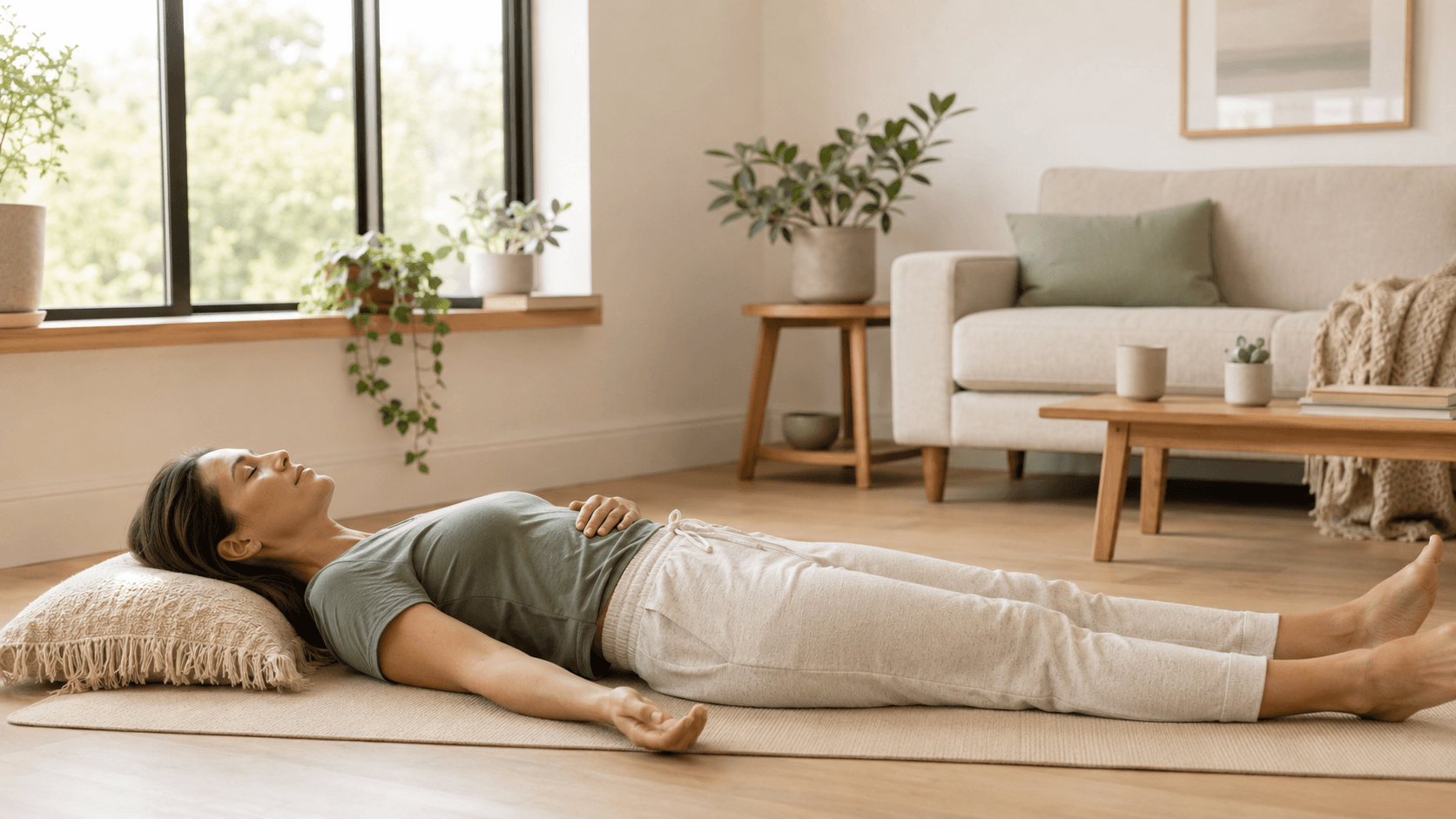
A Beginner's Guide to Body Scanning
A body scan is a simple way to pause and notice what is happening in your body without trying to fix every sensation. This beginner-friendly guide offers a calm 3–5 minute practice you can use during ordinary days.

Continue exploring
Discover guides, supplements, books, and practical resources for stress & mental balance.