
How to Choose a High-Quality Supplement
Two supplements with the same ingredient name can still differ in important ways. This guide explains how to read the label, compare forms and serving sizes, understand quality testing, and spot vague marketing claims before you buy.
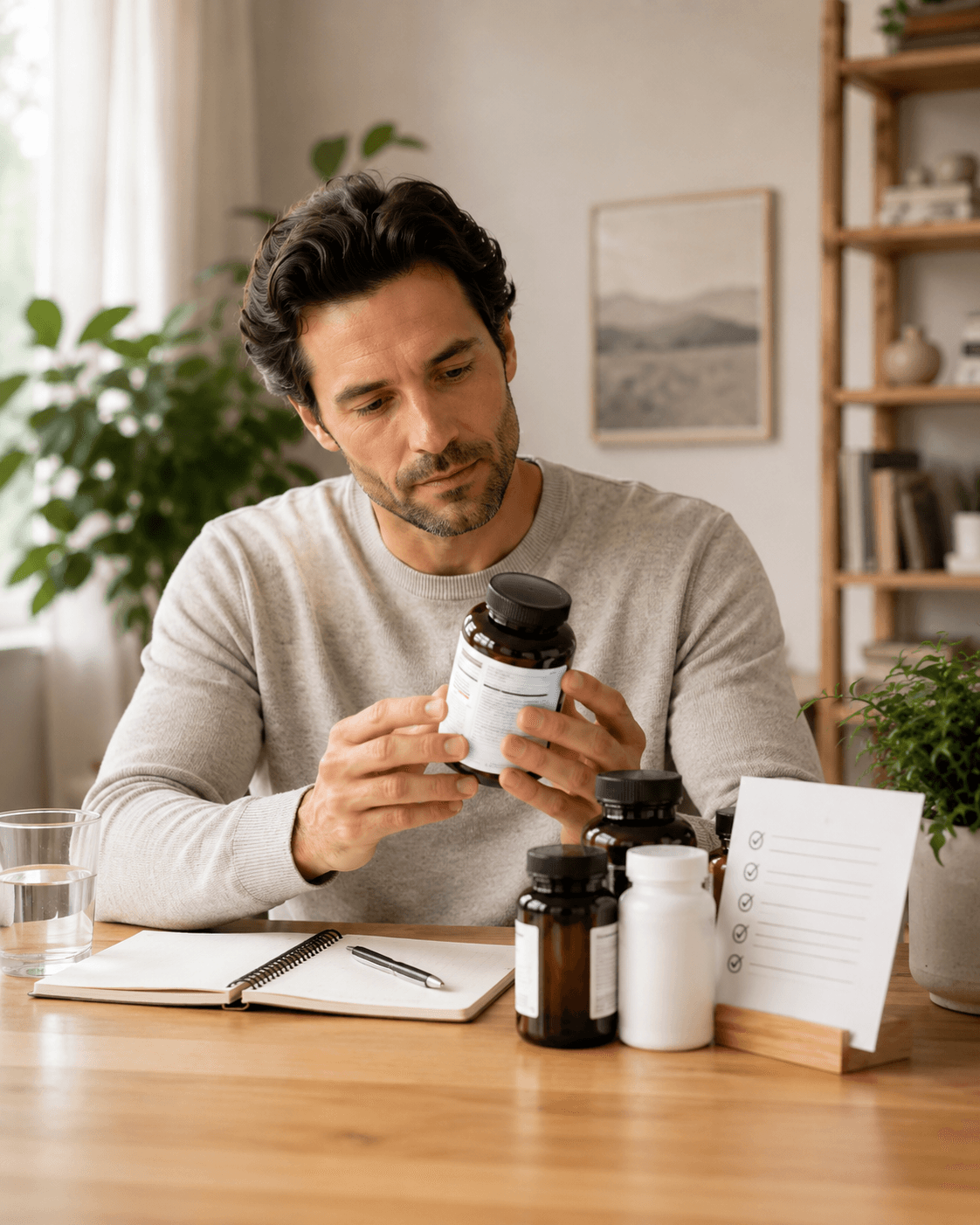
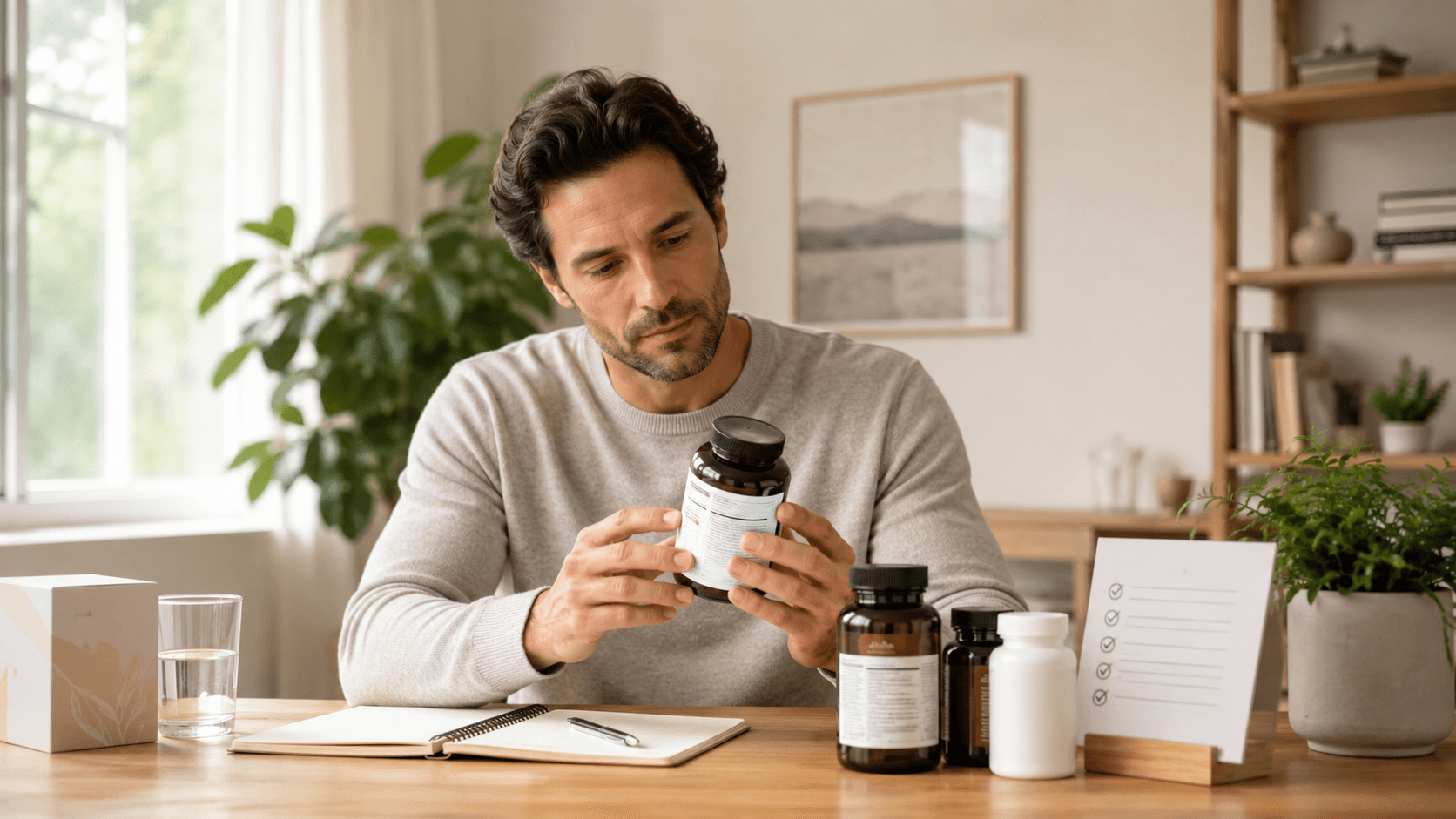
Two supplement bottles can look almost identical.
They may use the same ingredient name on the front. They may promise similar benefits. One may cost much more than the other.
But that does not automatically mean the more expensive bottle is better.
It also does not mean the cheapest product is the smartest choice.
A useful comparison starts with a simple principle:
The most important information is usually found in the Supplement Facts panel, the ingredient list, the warnings, and the quality information provided by the manufacturer.
This guide explains what to check and what not to assume.
Why products with the same ingredient name can still differ
The ingredient name on the front label is only the beginning.
Products may differ in:
- the exact form of the ingredient
- the amount provided per serving
- the number of capsules or scoops required
- the plant part used in a botanical product
- additional ingredients
- manufacturing quality
- independent testing
- storage instructions
- expiration date
For herbal products, the extraction method and the way the ingredient is prepared may also matter.
That is why two products labeled with the same herb or mineral may not be directly interchangeable.
Start with the Supplement Facts panel
The Supplement Facts panel is the best place to begin.
It tells you what active ingredients are included and how much is provided per serving.
Before buying, ask:
- What is the exact ingredient?
- Is the form clearly listed?
- How much is included per serving?
- How many capsules, tablets, or scoops make up one serving?
- Are there additional ingredients?
- Does the amount appear clearly, or is it hidden inside a blend?
Check the ingredient form
Some nutrients come in more than one form.
For example, minerals may be listed as different compounds. Botanical products may use a root extract, leaf extract, powder, or another preparation.
Different forms may vary in:
- how they are tolerated
- how they are absorbed
- how they have been studied
- how much of the active ingredient they provide
Compare serving size and amount per serving
A large number on the front of the bottle can be misleading if you do not check the serving size.
For example, the stated amount may require:
- two capsules
- four capsules
- multiple scoops
- more than one serving per day
Always compare serving size, amount per serving, and the number of servings per container.
This helps you understand what you are actually buying and how long the product may last.
Review the "Other Ingredients" section
The active ingredient is not the whole product.
The label may also include:
- capsule materials
- fillers
- binders
- sweeteners
- flavorings
- coloring agents
- allergens
What does "standardized extract" mean?
Some herbal supplements use the phrase standardized extract.
This generally means the extract is prepared to contain a specified amount of one or more compounds.
That may be useful when you are trying to compare a product with an ingredient preparation that has been studied.
But standardization is not a magic word. It does not automatically guarantee:
- effectiveness
- safety
- purity
- suitability for your situation
- consistency across all brands
- a high-quality final product
Why more ingredients are not always better
A long ingredient list can look impressive.
But more ingredients do not always make a better product.
Multi-ingredient blends can make it harder to understand:
- what each ingredient contributes
- whether each amount is meaningful
- whether ingredients overlap with other supplements you already use
- whether there are interaction risks
- what caused a side effect if one occurs
Be careful with proprietary blends
A proprietary blend may list the total amount of a mixture without clearly stating how much of each ingredient is included.
That makes it difficult to compare the product with research or with another label.
It can also make it harder to assess whether one ingredient is present in a very small amount.
What third-party testing can tell you
Some products are tested by independent organizations.
Quality testing may help verify that a product:
- was manufactured appropriately
- contains the listed ingredients
- does not contain harmful levels of certain contaminants
A quality seal can be useful. But it is important to understand its limits.
A seal does not prove that:
- the product will work for your goal
- the product is safe for every person
- the product is appropriate with your medication
- the marketing claims are fully supported
Watch for vague or exaggerated claims
Be cautious when a label or product page promises too much.
Examples of red flags include claims that a supplement:
- cures stress
- instantly fixes sleep
- balances all hormones
- works for everyone
- replaces professional care
- guarantees results
- detoxes the body without a clear explanation
Check warnings and possible interactions
Even a well-made supplement may not be appropriate for everyone.
Before buying, check whether the product includes warnings related to:
- prescription medications
- over-the-counter medications
- medical conditions
- pregnancy or breastfeeding
- surgery
- age
- allergies
- combining several supplements
Use independent sources when possible
Do not rely only on the product page.
Useful places to check include:
- NIH Office of Dietary Supplements fact sheets
- NCCIH consumer information
- FDA dietary supplement resources
- a doctor or pharmacist
- independent quality-testing databases when relevant
A practical quality checklist
Before buying a supplement, ask:
- Is the exact ingredient clearly listed?
- Is the form clearly stated?
- Can I see the amount per serving?
- Do I understand the serving size?
- Are all active ingredients disclosed?
- Does the label avoid vague proprietary blends?
- Are warnings easy to find?
- Is independent quality testing available?
- Are the claims realistic rather than dramatic?
- Would a doctor or pharmacist need to review this choice?
A calm buying rule
A good supplement label should make your decision easier, not harder.
You should not need to guess what the bottle contains.
You should not need to decode vague promises.
You should not need to assume that a higher price means better quality.
Final thought
Choosing a supplement is not about finding the most impressive bottle.
It is about understanding what you are buying.
Read the facts panel. Check the form. Compare the serving size. Look for transparency.
Treat quality seals as useful signals, not guarantees.
And ask for professional guidance when a product may interact with your health, medications, or other supplements.
Educational Disclaimer
This content is for informational and educational purposes only. It is not intended as medical advice and does not replace professional consultation. Always speak with a qualified healthcare provider before making changes to your health routine.
Sources & Further Reading
- NIH Office of Dietary Supplements: Dietary Supplements — What You Need to Know
- NIH Office of Dietary Supplements: Dietary Supplement Label Database
- FDA: FDA 101 — Dietary Supplements
- FDA: Information for Consumers on Using Dietary Supplements
- NCCIH: Using Dietary Supplements Wisely
- NCCIH: What Consumers Need to Know About Dietary Supplements
- USP: Dietary Supplement Verification Program
- NSF: Selecting Dietary and Nutritional Supplements
Examples of Clearly Labelled Products
These products are shown as practical examples of transparent labelling. Always verify ingredients, serving sizes, and quality certifications before purchasing. Speak with a healthcare professional if you take medication or have a health condition.
Affiliate disclosure — This section may contain affiliate links. If you purchase through one of these links, ANIVO may earn a small commission at no extra cost to you. We only feature products we have reviewed editorially. This is not medical advice.

Magnesium Glycinate 400 mg
A highly bioavailable chelated form that may support muscle relaxation and sleep quality.

Ashwagandha KSM-66 300 mg
A clinically studied root extract that may help the body adapt to everyday stress.

Omega-3 Fish Oil 1000 mg
A clean, well-sourced fish oil with combined EPA/DHA for brain and cardiovascular support.
A Practice to Try
A short guided practice connected to this topic.
Nervous System Reset | Guided Breathwork
Beginner
A guided breathwork practice designed to help you explore short, intentional breathing patterns and return to a calmer state. This practice may support a sense of reset and nervous system awareness.
This practice is for educational purposes only and is not medical advice. If you feel unwell or have a medical condition, consult a qualified healthcare professional before starting any new practice.
Related Reading

Ashwagandha: What the Research Actually Says
Ashwagandha is one of the most visible herbs in the wellness world. But what does the evidence actually say about stress, sleep, and anxiety — and where does it fall short?

A Beginner's Guide to Supplements: What to Know Before You Buy
The supplement aisle can feel confusing. This beginner-friendly guide explains what supplements are, why quality and safety matter, what to check on a label, and when to ask a healthcare professional for guidance.

Continue exploring
Discover guides, supplements, books, and practical resources for stress & mental balance.