
Small Nutrition Habits That Make Eating Well Easier During Busy Weeks
When time is tight, the goal is not perfect meal preparation. A few practical shortcuts can make everyday food choices easier and less stressful.
Quick Summary
- Keep a small set of flexible pantry and freezer foods available for quick meals.
- Prepare components such as grains, chopped vegetables, or eggs instead of planning every meal in advance.
- Use a short rotation of familiar meals to reduce decision fatigue.
- Choose morning options that fit your appetite and schedule.
- Build a system that still works when the week does not go as planned.
Full Article
The hardest part of eating well during a busy week is often not knowledge. It is time, energy, and the number of decisions you have already made. The goal is not to cook elaborate meals every night. It is to make a few practical choices that leave you with more useful options when the week gets full.
Create a kitchen that helps you
What is available at home often shapes what feels possible. Keeping a small set of flexible foods on hand can reduce the pressure to start from zero every evening. Canned beans, lentils, frozen vegetables, whole-grain staples, eggs, yogurt, nuts, fruit, and simple sauces can all make quick meals easier.
Use freezer and pantry staples
Fresh food is useful, but it is not the only option. Frozen vegetables are often washed and chopped already. Canned beans can be rinsed and added to soups, salads, bowls, or pasta. Dry staples such as oats, whole-wheat couscous, rice, or pasta can provide a base when you do not have time for a full recipe.
Prep components, not perfect meals
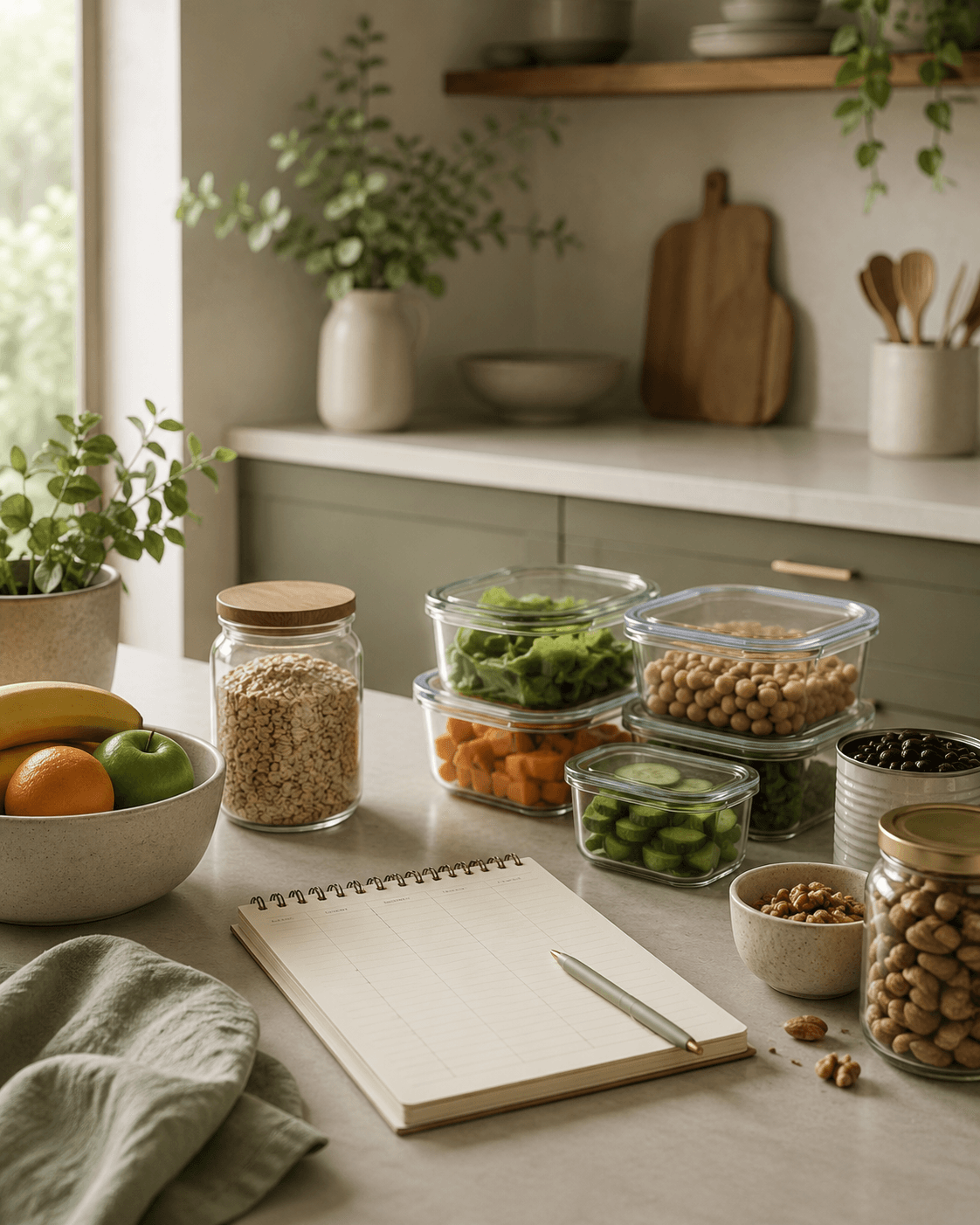
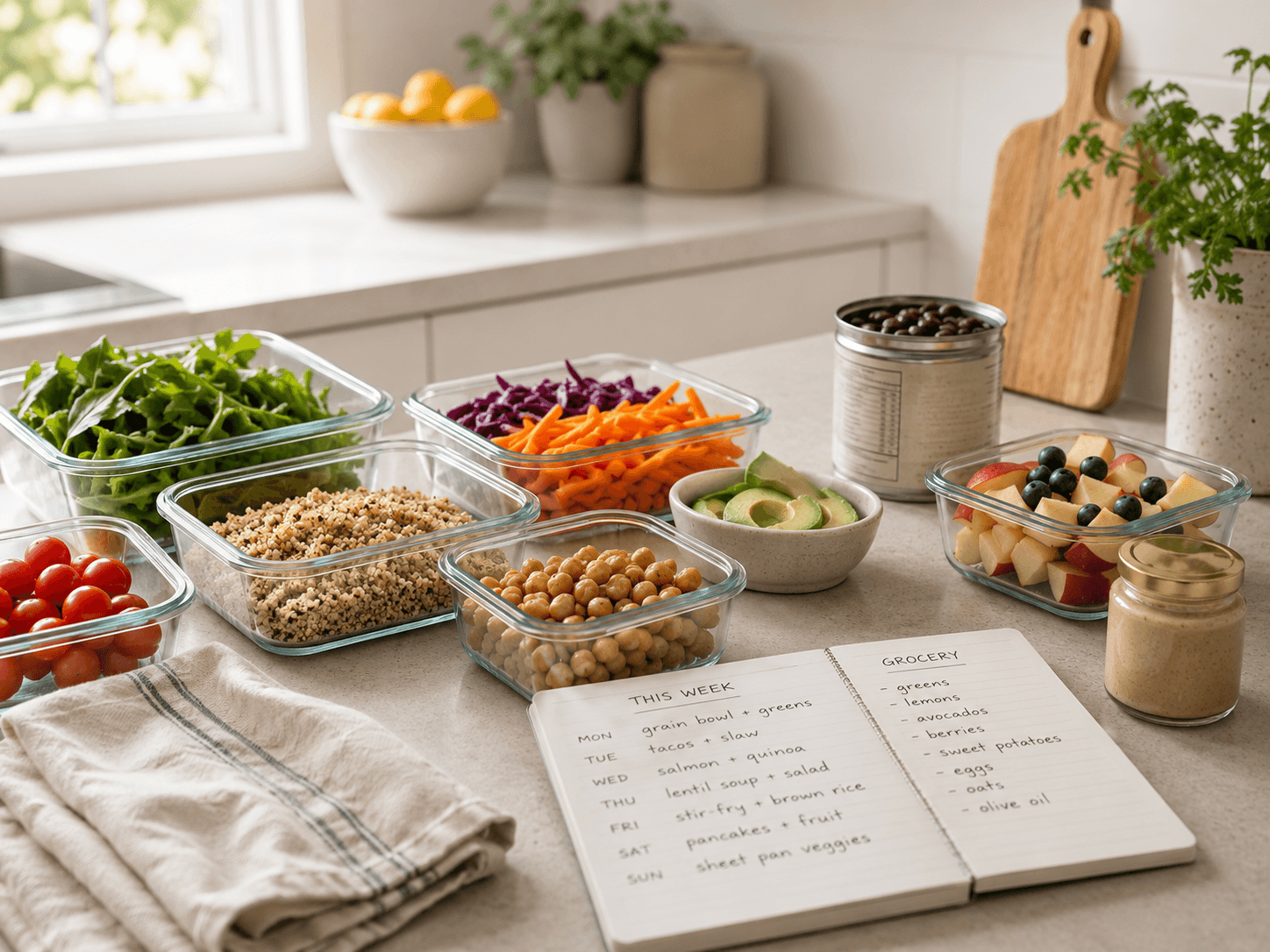
Preparing every meal in advance can feel unrealistic and can lead to wasted food. A lighter approach is to prepare a few components: wash fruit, chop vegetables, cook a grain, boil eggs, or make one simple protein option. These pieces can be used in different ways across several meals.
Reduce decision fatigue
A short list of reliable meals can be more helpful than constantly searching for new recipes. You might keep one quick pasta dish, one soup or stir-fry, one grain bowl, and one sandwich or wrap option in regular rotation. Familiar options can make food decisions easier when you are tired.
Keep mornings simple
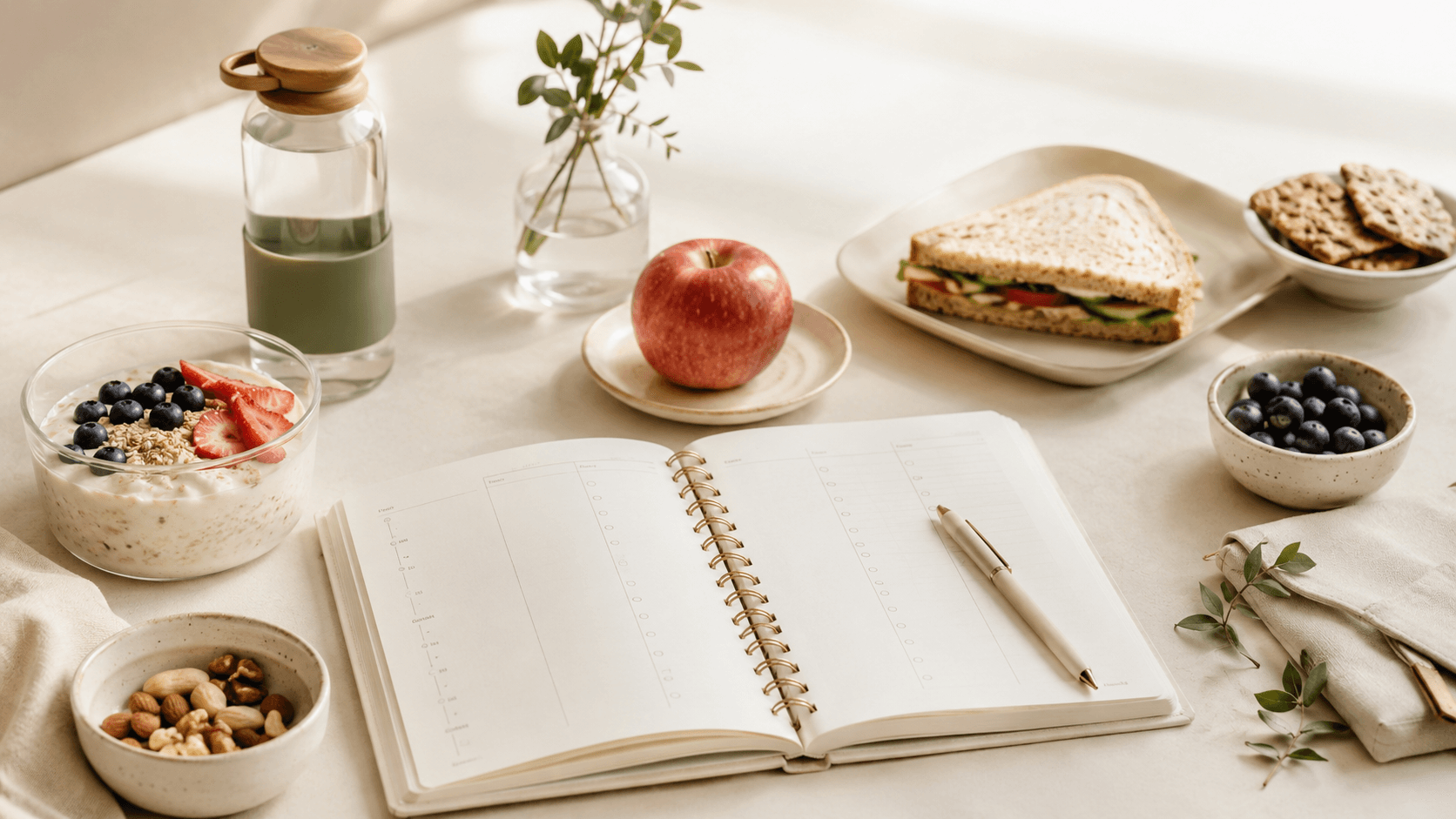
For people who prefer breakfast, simple options can reduce morning pressure. Overnight oats, yogurt with fruit and nuts, toast with eggs, or a piece of fruit with a handful of nuts are examples that need little preparation. The best option is one that fits your appetite, schedule, and access.
Leave room for real life
Some meals will be more convenient than others. That does not undo the choices you make on the rest of the week. Flexibility is part of a sustainable routine. A practical system is one that still helps on a busy Tuesday, not only on an ideal Sunday.
Skill to Try
The point is not to optimise every meal. It is to make nourishing choices more available when time and energy are limited.
This article is for general wellness education and is not medical advice. For nutrition guidance related to a health condition, medication, or individual dietary need, consult a qualified healthcare professional.
Educational Disclaimer
This content is for informational and educational purposes only. It is not intended as medical advice and does not replace professional consultation. Always speak with a qualified healthcare provider before making changes to your health routine.
Sources & Further Reading
Related Reading
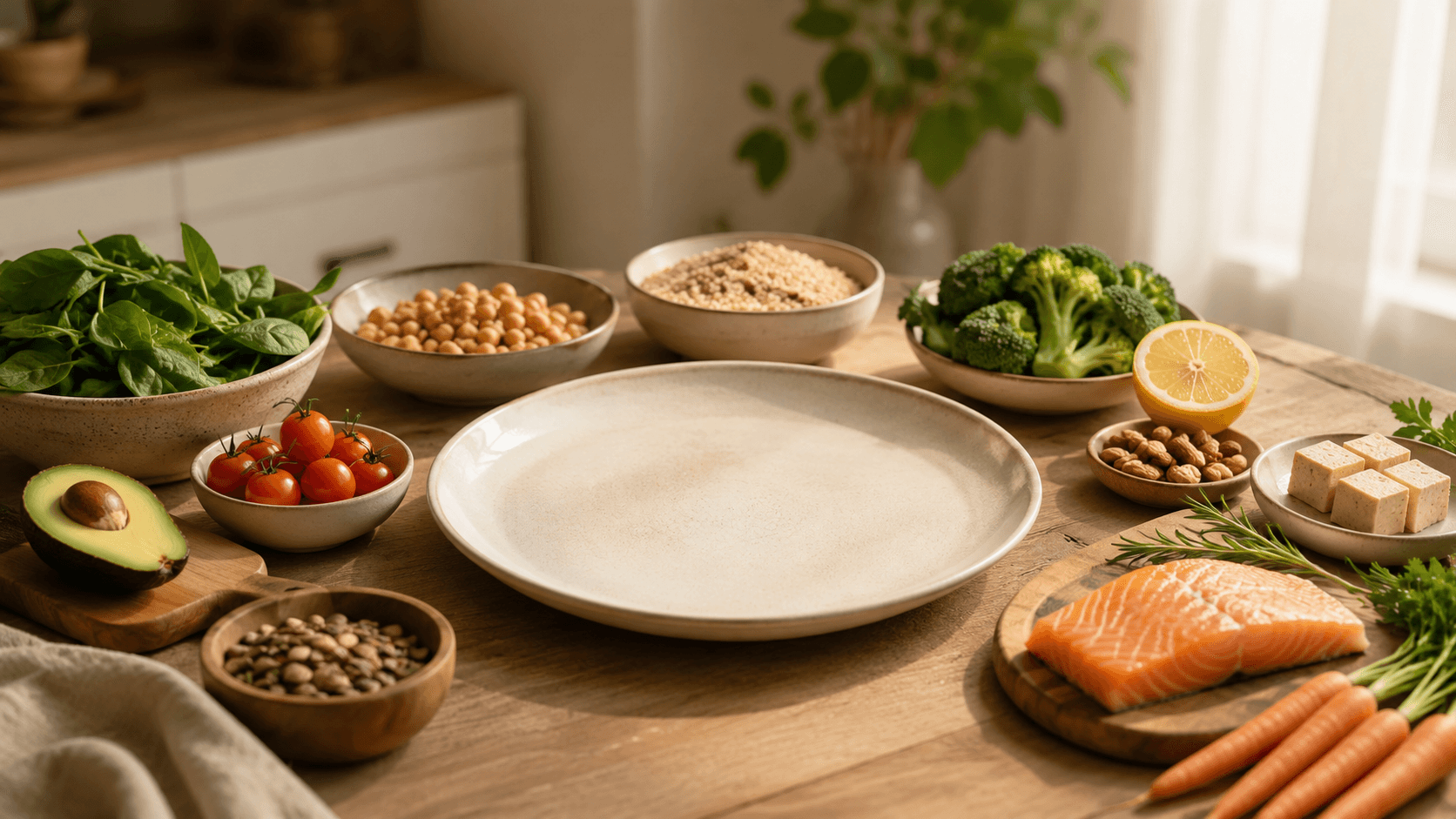
How to Build a Balanced Plate Without Overthinking Every Meal
Healthy eating is best viewed as a pattern over time, not a rigid rule for every bite. A simple visual framework can make everyday meals easier to assemble.
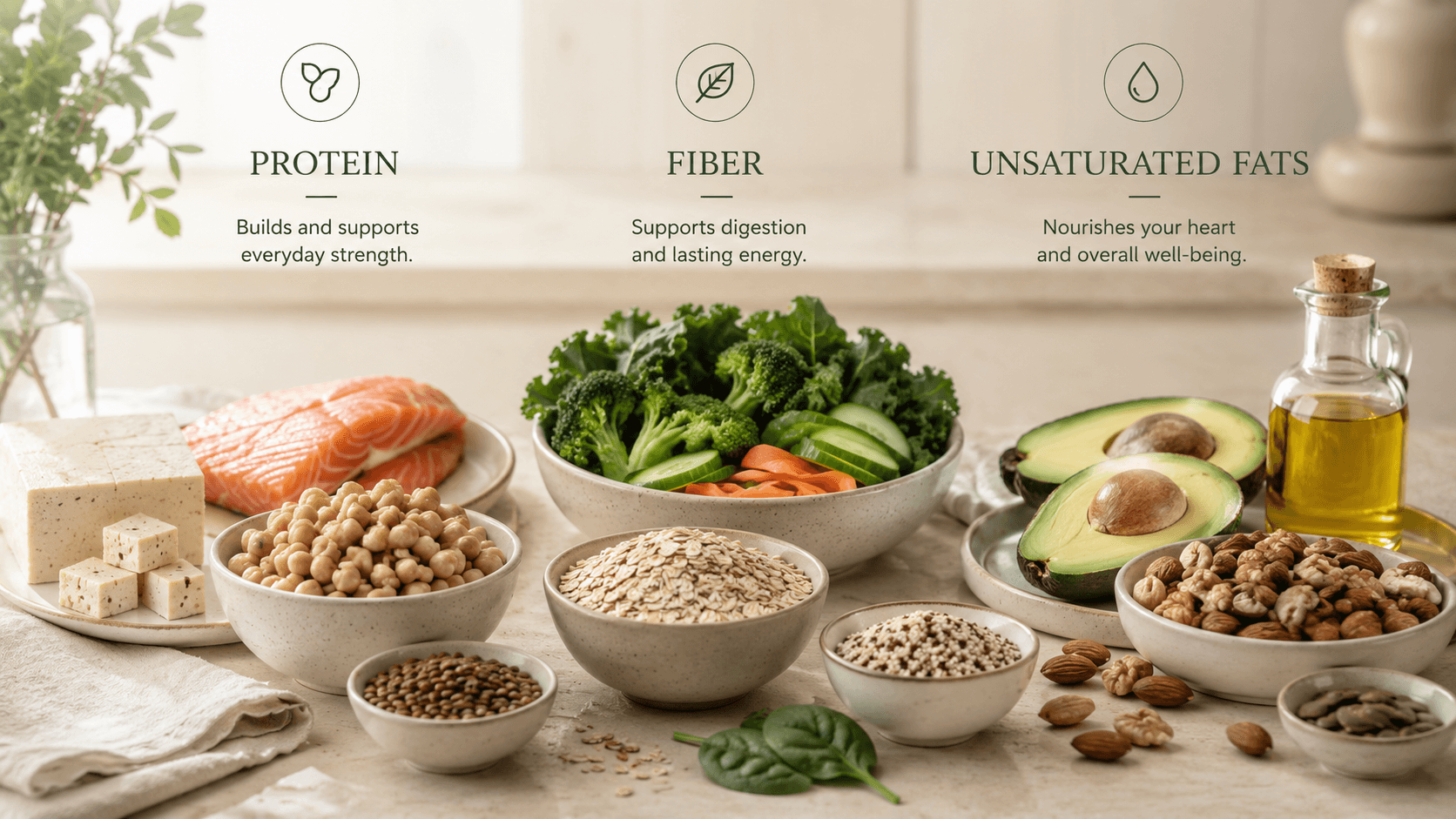
Protein, Fiber, and Unsaturated Fats: A Practical Guide to Everyday Meals
Protein, fibre, and unsaturated fats can make meals more satisfying and varied. Here is how to recognise them and combine them in everyday cooking.
Creating a More Regular Eating Routine During Busy Days
There is no perfect eating schedule. A more intentional routine may help some people plan ahead, manage hunger, and make food choices with less pressure.

Continue exploring
Discover guides, supplements, books, and practical resources for stress & mental balance.