
The Internal Clock: How Your Circadian Rhythm Controls Sleep
Your body follows an internal rhythm that helps shape when you feel alert and when you begin to slow down. Learn how light, timing, and daily habits may support a steadier sleep-wake cycle.
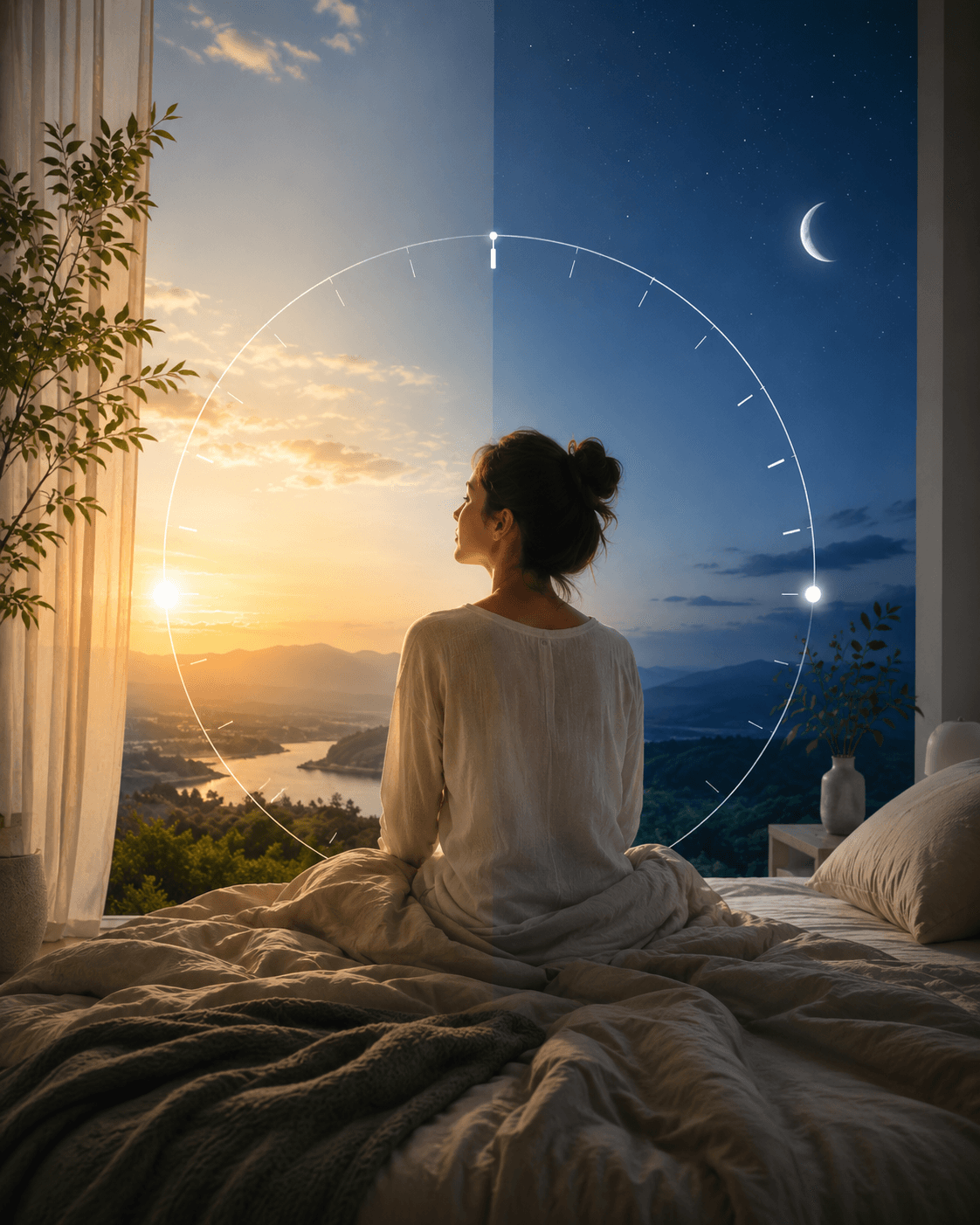

Have you ever felt exhausted during the day, only to become strangely alert when it is finally time to sleep?
Or noticed that waking up feels much harder after a few late nights, even when you technically spent enough hours in bed?
Sleep is influenced by more than tiredness alone.
Your body follows an internal rhythm that helps determine when you feel alert, when energy begins to dip, and when the body starts preparing for rest. This rhythm is known as the circadian rhythm.
Understanding it does not mean turning sleep into a complicated science project. It simply helps explain why timing, light, and everyday habits can make rest feel easier — or harder.
What Is the Circadian Rhythm?
The circadian rhythm is the body's roughly 24-hour internal cycle.
It influences sleep and wakefulness, but its role extends beyond bedtime. It also affects patterns of energy, alertness, hormone release, body temperature, and other biological processes throughout the day.
A small region in the brain acts as a central timekeeper. It receives information from the environment, especially light, and helps the body align its internal rhythm with the outside world.
The body does not need a clock on the wall to know that morning has arrived.
Light entering the eyes provides an important signal: it is time to become more alert.
As the evening becomes darker, the body receives a different message: the active part of the day is winding down.
Sleepiness Is Not Controlled by One System Alone
The circadian rhythm is important, but it is not the only factor that affects sleep.
Another process builds gradually while you are awake. The longer you stay awake, the stronger the drive for sleep usually becomes. This is sometimes called sleep pressure.
These two systems work together: your internal rhythm helps shape the timing of alertness and sleepiness, while sleep pressure grows as the hours of wakefulness add up.
This helps explain why sleep can sometimes feel confusing.
You may feel physically tired after a long day but still have difficulty falling asleep if the timing, light exposure, stress level, or evening routine keeps the body in a more alert state.
It also explains why a late afternoon nap may make bedtime harder for some people: some of the built-up sleep pressure has already been released.
Light Is One of the Body's Strongest Time Signals
The body uses light as an important cue.
Natural light earlier in the day supports alertness and helps reinforce the difference between daytime and nighttime. As light decreases in the evening, the body can begin preparing for sleep more naturally.
This does not mean that a single walk outside will fix every sleep problem.
It also does not mean that all artificial light must be avoided completely.
The more useful idea is contrast.
The body benefits from a clearer difference between the bright, active part of the day and the softer, quieter part of the evening.
- Seeking daylight earlier in the day
- Dimming indoor lighting later in the evening
- Reducing unnecessary screen brightness
- Stepping away from highly stimulating content close to bedtime
Why Consistency Can Make Sleep Easier
The body responds well to patterns.
When sleep and wake times shift dramatically from one day to the next, the internal clock receives mixed signals. A late weekend, an unusually early workday, or several nights of staying up much later than usual can make the following days feel harder.
This does not mean every bedtime needs to be exact.
Real life is not perfectly predictable.
A more realistic goal is to create a general rhythm:
- Wake up at a similar time on most days
- Expose yourself to daylight earlier in the day when possible
- Avoid making every evening look completely different
- Notice whether large schedule changes affect your energy or sleep
The Role of Morning Light
Morning light is one of the simplest ways to help the body recognize the start of the day.
Opening the blinds, stepping outside, walking briefly, or spending time near a bright window can create a clearer daytime signal.
This matters because the internal clock is shaped by patterns across the entire day, not only by what happens in the hour before bed.
A better evening often begins with a better morning cue.
That does not mean every morning needs a perfect routine.
It simply means that light exposure earlier in the day may help reinforce the rhythm the body is already trying to follow.
What Can Disrupt the Sleep-Wake Rhythm?
The internal clock is flexible, but modern life can create conflicting cues.
- Irregular schedules: A constantly changing sleep schedule may make it harder for the body to predict when it should feel alert and when it should begin slowing down.
- Bright evenings: Working late under bright lights or staying highly stimulated until bedtime can blur the boundary between day and night.
- Travel across time zones: Jet lag happens because the internal clock does not immediately match the time in a new location. The body needs time to adjust.
- Shift work: Working at night or rotating between schedules can make sleep more challenging because the demands of work may conflict with the body's usual rhythm.
- Stress: Even when the timing is right, an overloaded nervous system can make it difficult to transition into rest. This is why circadian rhythm is part of the picture, not the entire answer.
Practical Habits That May Support a Steadier Rhythm
There is no need to overhaul your entire schedule.
Start with a few habits that feel realistic.
- Seek daylight earlier in the day: Natural light can help reinforce the difference between morning and evening.
- Keep wake-up times relatively steady: Waking at a similar time on most days may be more useful than chasing the perfect bedtime.
- Lower stimulation later in the evening: Softer lighting, fewer work messages, and a calmer pace can help create a clearer nighttime signal.
- Notice the effect of naps: A nap may be helpful on some days, but longer or later naps can make bedtime more difficult for some people.
- Pay attention to caffeine timing: Caffeine can affect the build-up of sleep pressure. Sensitivity varies, so notice whether caffeine later in the day changes the quality of your sleep.
- Give changes time: The internal clock does not always adjust instantly. A steadier rhythm often comes from repeating small habits rather than making one dramatic change.
Circadian Rhythm Is Not the Only Explanation
It is easy to blame every difficult night on a "broken" body clock.
But sleep is influenced by many things: stress, anxiety, pain, medication, health conditions, sleep environment, breathing-related sleep problems, daily habits, and life circumstances.
A few disrupted nights do not automatically mean something is wrong.
However, ongoing sleep difficulties deserve attention.
Consider speaking with a qualified healthcare professional if sleep problems persist, regularly affect daily functioning, or occur alongside symptoms such as loud snoring, pauses in breathing, gasping, or significant daytime sleepiness.
The ANIVO Takeaway
Your circadian rhythm is not a switch that needs to be reset overnight.
It is a flexible internal pattern that responds to repeated signals.
Light in the morning. A steadier wake-up time. Less stimulation late at night. A clearer transition between activity and rest.
None of these habits guarantees perfect sleep.
But together, they can help the body understand when the day is beginning — and when it is safe to let the day end.
Educational Disclaimer
This content is for informational and educational purposes only. It is not intended as medical advice and does not replace professional consultation. Always speak with a qualified healthcare provider before making changes to your health routine.
Questions About This Topic
Sources & Further Reading
- StatPearls — Physiology, Circadian Rhythm
- National Heart, Lung, and Blood Institute — How Sleep Works
- National Heart, Lung, and Blood Institute — Healthy Sleep Habits
- National Center for Complementary and Integrative Health — Stress, Anxiety, and Sleep Problems: Considering Complementary Approaches
- Gardiner et al. — The Effect of Caffeine on Subsequent Sleep: A Systematic Review and Meta-analysis
A Practice to Try
A short guided practice connected to this topic.
Nervous System Reset | Guided Breathwork
Beginner
A guided breathwork practice designed to help you explore short, intentional breathing patterns and return to a calmer state. This practice may support a sense of reset and nervous system awareness.
This practice is for educational purposes only and is not medical advice. If you feel unwell or have a medical condition, consult a qualified healthcare professional before starting any new practice.

Continue exploring
Discover guides, supplements, books, and practical resources for stress & mental balance.